
Pakikisama in Filipino Relationships: Why Family Harmony Matters When Dating a Filipina
Key Takeaways
- Pakikisama is a Filipino cultural value prioritizing group harmony and family unity over individual preference—not a character flaw, but a core belief system that shapes decision-making and relationships.
- Your Filipina partner’s family involvement in her life and decisions isn’t interference; it reflects her genuine experience of family as an extension of herself, making collective decisions feel safer and more caring than independent ones.
- She may avoid direct confrontation due to hiya (concern for reputation), communicate indirectly, and expect you to engage meaningfully with her family—understanding this as cultural communication style rather than passive-aggressiveness is essential.
- Interdependence, not independence, is the default proof of relationship health in Filipino culture, meaning she can be ambitious and have strong opinions while still prioritizing group consensus and harmony.
- Accepting pakikisama means recognizing that flexibility with family plans and multi-generational involvement are expressions of loyalty and love, not signs of dependence or control.
You plan a weekend trip with your Filipina girlfriend. She says yes, then cancels two days later because her family decided to hold a surprise dinner. You’re frustrated, maybe even a little resentful. Until you realize she wasn’t choosing them over you. She was living by a cultural value so deeply embedded in how she was raised that separating herself from her family’s plans wasn’t really an option she considered. That value is pakikisama meaning relationships in a way most Western men don’t encounter until they’re already confused and questioning everything.
Pakikisama is a Filipino cultural value emphasizing group harmony, social cooperation, and getting along with others. It means your Filipina partner prioritizes family unity, makes decisions collectively rather than independently, and expects you to respect her family’s involvement in her life. This isn’t a character flaw. It’s a core cultural value that shapes how she communicates, socializes, and builds relationships.
The Specific Meaning of Pakikisama in Filipino Culture
The root word is “sama,” which translates as “to join.” Pakikisama, then, literally means the act of getting along with others: the willingness to yield to group consensus in order to maintain social harmony. Social scientist Frank Lynch first identified it as one of three critical components of Filipino social acceptance and smooth interpersonal relations, alongside the use of euphemisms and reliance on go-betweens (IAMURE International Journal of Literature, Philosophy and Religion).
This isn’t obedience. It isn’t weakness. It’s a conscious value that positions group unity above individual preference, rooted in what scholars call pakikipagkapwa-tao (pah-kee-kee-PAG-kahp-WAH TAH-oh), shared humanity, the recognition that other people deserve your dignity and empathy as a baseline, not a reward. According to Visa Philippines market research, pakikisama operates across every facet of Filipino life, including private family dynamics, multi-generational households, and public social settings. It isn’t something she switches on at family gatherings. It’s running in the background constantly.
Before you go further into understanding your partner’s behavior, it helps to spend time understanding Filipino relational principles before dating — the way connection, loyalty, and trust are built here follows a logic that’s genuinely different from what most Western men are used to.
How Pakikisama Shows Up in Your Relationship

She probably asks her mother, her sister, or her older brother before committing to a plan with you. She might say yes to a dinner reservation, then come back twenty minutes later and say the timing doesn’t work because her family needs her. At family gatherings — and there will be many — she’ll expect you to show up, engage, and remember names. Not because she’s testing you. Because showing up is how belonging is communicated in her world.
Family context is often present on early dates in ways that can catch Western men off guard. A cousin might tag along. Her mother might call twice. Her brother might be in the background when she’s on video with you. This isn’t surveillance. It’s the normal texture of how she lives her social life.
You’ll also notice that she rarely confronts problems directly. If something is bothering her, she might hint at it, go quiet, or bring it up through a third party. This connects directly to pakikisama’s companion value, hiya (HEE-yah), the concern for one’s own reputation and the reputation of others that makes blunt confrontation feel unnecessarily harmful. She’s not being passive-aggressive. She’s protecting both of you from a kind of social friction that feels genuinely costly to her.
Why Your Filipina Partner Prioritizes Family in Dating Decisions
Here’s where Western men most often get stuck: she doesn’t experience family input as interference. She experiences it as care.
Multi-generational living is standard, not exceptional, in the Philippines. Close family proximity makes family involvement an expected and natural part of any major decision. Group decisions are seen as safer and more thoughtful than unilateral ones. Going against family consensus carries real social weight — it risks hiya for her and, by extension, for you. But beyond the social mechanics, she genuinely sees her family as an extension of herself. Not as a separate unit she is accountable to, but as part of who she is. Asking her to make independent choices without consulting them isn’t liberation to her. It often feels like isolation.
When you understand this, her behavior stops reading as dependence and starts reading as consistency. She operates the same way with you as she does with everyone she loves: she pulls you into her circle rather than asking you to form a separate one with her.
Independence vs. Interdependence: Why This Looks Like a Red Flag but Is Not
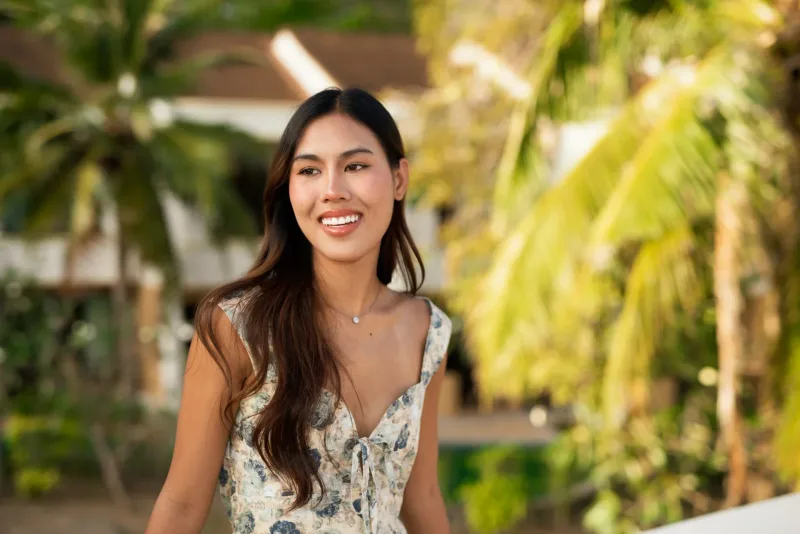
The concern is fair, and worth addressing plainly. Pakikisama is not the same thing as lacking a self. Modern Filipinas regularly navigate careers, relocate abroad, run businesses, and assert personal ambitions. What makes pakikisama a cultural value rather than a personality trait is that it’s a deliberate orientation toward others, not an absence of individual identity. She can have strong opinions, clear preferences, and real independence, and still choose to maintain group harmony as a priority in how she expresses those things. These aren’t contradictions.
The confusion happens because in Western relationships, independence is often the default proof of health. In Filipino relational culture, interdependence carries that weight instead. Different default, not a lesser one.
What Dating a Filipina Really Means for Family Involvement
You will be close to her family, and framing that as an obligation you manage misses the point. Her family and her relationships aren’t compartmentalized. Dating a Filipina means entering her world, not extracting her from it. That doesn’t mean you need to attend every birthday and immerse yourself in group dynamics you didn’t choose. It means showing up with genuine interest when it counts, learning the names, and not treating her family as an obstacle between you and her.
Men in expat communities describe this shift as the most significant adjustment they made, not understanding it intellectually, but actually accepting it emotionally. A recurring observation in foreigner forums: a Western man assumed his girlfriend’s constant family invitations meant she didn’t want time alone with him, until he recognized that pulling him into her family circle was exactly how she was showing him he mattered.
Pakikisama Is Not Compulsive People-Pleasing
This is the most common misread. According to Filipino leadership educator Jef Menguin, authentic pakikisama is built on genuine consideration, respect, and empathy: the principle that a good Filipino does not hurt the feelings of others. It’s an ethic of care, not a behavioral compulsion. She’s not saying yes because she can’t say no. She’s calibrating how and when she says difficult things to minimize harm, which is a skill, not a deficit.
That said, Menguin also notes that when pakikisama is misused, it can suppress individuality and allow harmful family dynamics to go unchallenged. There is a real shadow side here, and it’s worth knowing.
When Pakikisama in Filipino Culture Becomes a Problem

Pakikisama works when the group around her is healthy. When it isn’t, the same value that builds belonging can become a mechanism of control. A family member who knows she won’t break harmony can exploit that. A family system with deep dysfunction can use group unity as cover for avoiding accountability. She may find it genuinely difficult to call this out, not because she can’t see it, but because naming it publicly would violate the very thing she values.
Many modern Filipinas navigate this tension in real time. They respect family while quietly asserting independence. They find indirect ways to push back. They build lives that include family without being fully determined by them. The tension isn’t resolved. It’s managed, usually with a great deal of emotional labor on her part. Your job isn’t to fix it. Your job is to not add to it by demanding she choose between you and her family.
How to Respect Filipino Social Harmony Without Losing Yourself in Her Family Dynamics
Accepting this cultural value doesn’t mean surrendering your own preferences indefinitely. It means adjusting how you enter her relational world.
Show up to the events that matter. You don’t need to attend every gathering, but the ones she signals as important: meet those with presence, not obligation. Genuine interest in her family members is visible almost immediately; so is performative attendance.
Frame requests around shared benefit. If you want more time alone with her, don’t position it as competing with her family. Position it as something you both need to grow your relationship, something her family will ultimately benefit from too. This maps directly onto pakikisama logic: the group benefits when the relationship is strong.
Communicate indirectly when tensions arise. If there’s a family boundary you need to establish, work through her rather than around her. Going to her family directly, without her, breaks the relational structure she operates in and puts her in the middle in the worst way.
Give it time. Her loyalty to you builds as you prove you respect her world. She’s watching whether you integrate or whether you isolate. The men who do this well describe it not as compromise but as expansion: they didn’t lose their own lives, they added a larger relational network to them.
What Pakikisama Meaning in Relationships Requires of You
She will never fully separate her decisions from her family’s world, and she doesn’t want you to ask her to. This isn’t weakness, indecision, or an absence of commitment to you. It’s the framework through which she builds her most important relationships, and that now includes you.
The pakikisama meaning relationships framework gives you doesn’t ask you to abandon your own culture. It asks you to recognize that hers is operating from a different but coherent set of values: that harmony matters, that the group carries the individual, and that belonging is built through showing up, not through declarations of independence. That’s a value system with real strengths and real demands.
If you’re at the point of questioning whether she’s right for you because she checks in with her family or struggles to confront conflict directly, the honest answer is: that behavior isn’t going to stop. But it can become a feature of your relationship rather than a fracture in it. The shift is yours to make.
Common Questions About Pakikisama Meaning in Relationships
What does pakikisama mean in a relationship context?
Pakikisama refers to the Filipino value of maintaining group harmony and getting along with others, including the willingness to yield to group consensus. In a relationship, it means your partner prioritizes family involvement in her decisions, communicates indirectly to avoid conflict, and expects you to respect and engage with her extended social circle. It shapes how she builds trust and loyalty over time, slowly, through consistent presence and demonstrated respect for her world.
How does pakikisama affect dating a Filipina?
It affects almost everything. Family events will be frequent and expected. She’ll consult her family before agreeing to major plans. She’s unlikely to confront disagreements head-on. And she’ll watch carefully whether you make genuine effort with the people she loves. Understanding this early makes the entire relationship easier to read and to build.
Is pakikisama specific to Filipino culture or does it appear elsewhere?
It’s a named, studied concept within Filipino social psychology, identified by social scientist Frank Lynch as central to Filipino interpersonal relations. While similar values exist in other collectivist cultures across Asia and beyond, pakikisama is specific in its connection to the Filipino concept of pakikipagkapwa-tao, treating others as fellow humans with inherent dignity, which gives it a particular ethical character beyond simple conformity.
Does pakikisama mean she will never disagree with her family?
No. Most Filipinas draw clear lines between maintaining harmony and abandoning personal values. Pakikisama operates contextually; it’s more elastic than it looks from the outside. She may push back on family decisions privately, find indirect ways to advocate for herself, or quietly assert independence while preserving the surface of group unity. How she negotiates this depends on her family, her upbringing, and her individual personality.
Can pakikisama create real problems in a cross-cultural relationship?
Yes, and being honest about that matters. If her family is healthy and functional, pakikisama creates warmth, inclusion, and a relational depth many Western men haven’t experienced before. If her family has dysfunction, the same value can make it hard for her to set limits or acknowledge problems. Watching how she handles conflict within her family, not just with you, tells you a great deal about how the value operates in her specific life.

Start Meeting Filipinas for Free
Meet Filipinas looking for serious relationships, real conversations, and meaningful connections.